Forest of lies
Excerpt from Hyun’s memoir, found in the forest:
The Wrong Way
by Hyun Min-ho.
I did not volunteer for the army because of national pride or ambition, I joined for love, to lift my family out of poverty.
That was the lie I told myself. Until I escaped. Until Francesca forced me to admit that I was ambitious.
I knew if I smiled at the wrong time or stared too long, the soldier’s eyes would follow us. Me and my three brothers accompanied my mother on Saturdays because the market was quieter—not a sabbath, North Korea is atheist—because the military presence was higher and the crowds were much smaller. There was always a chance her little jokes to keep us happy would draw a stare. The merchants of Chongjin watched each other—it meant you were loyal to the regime.
My hometown had died long before it was upgraded from an industrial town to a military stronghold. No plant life grew in Chongjin. Not a tree or a blade of grass. Every garden a dead grey patch of dirt. I had a view of the mountains from my bedroom window—that I shared with my three brothers—and the lowlands that burst like a botanical dream. My father said our town was poisoned and nothing would ever grow in the soil again, even long after humans were gone. I suspect he wasn’t just talking about plants.
My Father, Fang, worked in the factory that pumped out chemical waste. He had lost all his hair from exposure—even his eyebrows. All day, his job was to turn a wheel and wait. Turn wheel, stand by, turn wheel again, wait. My mother worked in a textile mill, pressing a button.
Press button, wait, press button, wait.
I had an ambition to be the man who sat in the office above, making sure they did their work with efficiency. There was no way I was going to be like my parents—I suppose that’s how it is with kids. We want to outdo our parents, and we even disrespect them for doing the best they can to protect us.
We were lower class, Songbun—a caste system that stamps every citizen with a lifelong label. Your status is based on how much your grandparents smiled at the mention of our Glorious Leader’s name. I would later learn that my chances of ever working in an office had been fixed at zero, long before I was born. My three brothers all had similar big dreams, and they would have to give them up too.
Our house had been assigned to us, in a block for factory workers—working-class heaven. There was no need to worry. No need to waste time working towards a promotion or a raise. The salary was the same for everyone, forever, until you dropped dead from pushing buttons or turning wheels. Whoever thought socialism was a workable system clearly never had a dream of their own.
By the time I was old enough to understand how my dreams would always be just dreams, my mother walked with a hunch. Like she was slowly inching her way to her grave. She used to be so beautiful and full of hope. Empty hope fuelled by contraband books that made her believe the Americans would invade and free us.
Her dream was to defect to the south and paint and become a stage actress. My father wanted to play music, keep animals and build his own house. The famine had given her hope. It was easy to defect during a famine if you had money. Despite the hardship, famine was a good time due to contraband. All outside influence was forbidden: music, movies, books, everything. But when the government couldn’t provide, feeding yourself meant everybody had to ship their own food into the country from abroad, usually from China. This meant other things, if you know what I mean. North Koreans got to know the outside world, and my mother said it was glorious—but not as glorious as our Glorious Leader, obviously.
My family’s sarcasm aside, contraband turned hardship into something close to a normal life for my parents. This was how my mother learned about and became obsessed with Nelson Mandella, Gandhi and in particular, Evita Perón. But after the famine, that all changed. Our new Glorious Leader put more secure barriers along every inch of the borders.
He had built one of the world’s most fortified prisons, combining natural terrain with deadly defenses. Along the DMZ, a no-man’s land stretches for kilometers, lined with fences, razor wire, and hidden minefields, while watchtowers and bunkers are manned by armed soldiers. Motion sensors and cameras constantly scan for movement, and rugged mountains and rivers add natural obstacles. Any attempt to cross risks immediate detection, gunfire, or death, with relentless surveillance and propaganda making escape nearly impossible.
This stopped the contraband and the defections.
Getting out also became too expensive, brokers charged double, then triple and then it became so expensive that my mother gave up. She walked around the house like a ghost, the expression she put on for the outside world rooted in something that changed me.
Every day became the same for us. In the morning, we were commanded to get up by a woman in a car with a loudspeaker who drove around the town. A second woman was waiting outside the workers’ block for the school bus. At the school gates, another woman with a loudspeaker told us to go inside and be good. In school, a loudspeaker on the wall told us which class was next and to be good. At the end of the day, at promptly 5pm, a loudspeaker told us to leave school. And be good! It made me want to be bad.
Outside, a woman with a loudspeaker corralled us back onto the bus. At home, we were reminded not to leave the house, unless strictly necessary—and to be good. Later, a military jeep drove around telling us to watch the national broadcast, reminding us how wonderful our Majestic Leader was for taking care of us and preventing our enemies from attacking.
If you had bad Songbun, ‘tainted blood,’ but a good citizen, you and your children’s children avoided the prison camp.
On the weekends, we were told to get up and go to the park for events in town—usually to celebrate our Glorious Leader. Or we were instructed to go to see school kids marching around in perfect lines like a miniature army.
Seeing those kids as a teenager, who were proudly watched by people with loudspeakers, gave me an idea. If I joined the army of my own volition, I could raise my status.
I wrote a letter and handed it to a kind faced man in an officer’s cap. He looked down, thought for a while, and noted the number of our door.
When I was seventeen, I would be conscripted anyway. And so, the time came, I was leaving behind one monotonous routine for another. A far more gruelling and regrettable existence.
I stopped reading, “What are you expecting to find? A story for your viewers?”
“The comments are lit. People want to know what happened to Francesca.”
“Aren’t you…?”
“Say it.” She shoved me with her toe.
“Exploiting her?”
“No, I’m documenting everything. Police take so long to investigate. We’re doing it for them. Might save her life if she’s still alive.”
I went to bed and closed my eyes. She lay beside me, put her leg over me and we fell asleep.
When I woke, it was dark, 3am. The van was boiling hot. She had Hyun’s phone, Francesca’s diary and a selection of letters from her brother on her lap. Her laptop sat on the bed, a cursor blinking. She scrambled to get her phone charger in the kitchen, plugged it in and stared at me.
“My phone’s blowing up, new subscribers.” She looked out the window at trees blowing in the wind and collected up the letters.
“You should sleep, Lana, you’ve got bags under your eyes.”
She padded across the floor and looked in a mirror on the back of the driver’s seat. “You should have said. I’ll put on some makeup.”
She lay on the covers, thinking. “There’s condensation on the windows. It’ll go mouldy.”
I groaned and mumbled into a pillow.
“I’ll just lie here thinking about it.”
When I didn’t move, I felt her get up.
I sat up and sighed and watched her wipe the windows dry, then she came back to bed. The extractor fan ticked, barely noticeable, normally. She lay there reading until I managed to drift off.
I woke to the sound of a bubbling kettle. My phone read 6:17am, still dark. She handed me a black coffee.
I cupped it. “You look… caffeinated.”
She rubbed my head. “I keep getting this weird smell of fish.” She sniffed herself. “And hearing things outside.”
“You’re stressed.”
“Will you read to me again? I love your accent?”
“Grand.”
“Grand,” she said, mocking my accent and kissed me.
The Wrong Way
Chapter 2
I was about to give a decade of my life away, willingly. Conscription is a minimum of ten years. The Central Military Commission set annual target quotas which were implemented by schools. Children of political elites were often exempt from serving in the army, unless they chose to. As a working-class family, we were considered the ‘wavering class.’ My mother was secretly a revolutionary—‘the hostile class’—but she was just very good at hiding it. As we were of a lower social status (poor Songbun), we would have to prove our loyalty by serving in the military.
My brother, Joon, who was two years younger was as passionate as my mother and was a born revolutionary, but he had asthma and would likely be exempt. My other two brothers, much younger at five and seven, were turning out to be healthy—despite poor nutrition and cold water in the taps—and they would likely have to give ten years service too.
I was determined to set a good example for them, show them how to do it like a man. As I would never do better than factory work, I was also determined to make life as easy as possible by excelling as a soldier. If I signed up to any training available, maybe I could get a promotion and raise my status some more.
As I sit here, far from the oppressive grip of my government, I can’t help but reflect on my ambition. Francesca said my dreams and my career should never intersect; a career should fuel a dream. I told her the terrible things that I did were not my fault but the doctrine that warped my mind and still does. Songun—not to be confused with Songbun—which sounds like a song about a gun. The irony.
Songun is the military-first policy, which prioritizes food and resources, such as electricity and hot water, for soldiers at the expense of civilians. It was omnipresent, and something we all accepted as normal. It wasn’t until I met Francesca, that I began to understand the full impact of this doctrine on me.
From a young age, we were taught that the military was the backbone of our nation, the ultimate protector of our identity. As a working-class boy, joining the military was both an honor and necessary. I looked forward to the call.
The day I was conscripted was one of great pride, one I will never forget but, as Francesca told me often, for all the wrong reasons. Rather than a speaker calling me outside, there was a knock at the door. For weeks, we had waited for this arrival. My brothers had worried the most, knowing that I, who stood between their imaginary world of my storytelling and reality, was about to be stolen from them. My dreams sustained my parents too, who often listened whenever I left the bedroom door open for them. When those six officials knocked, we knew it was over. I was leaving, and the stories that once filled our house would fall silent.
Dad let the recruiters in and called me out of my room. I felt a mixture of pride at being able to defend my people, dread about being taken from the love of my family, and determination to be the best soldier to have ever worn the uniform. Despite what I knew about Songbun and my family’s low status, I believed I could change our destiny: get a promotion, even become a recruiting officer one day.
The recruiters were very kind and respectful, which was a cruel lie. Their warmth and friendliness lasted to the end of the path. I felt a hand on my shoulder, and another pushed me in my back before I could wave at my family. I did not get the chance to look each one in the eye and reassure them that no matter what, I would always be me. Hyun.
As I was marched to the truck, I glanced at my brothers. Their faces were knotted from trying not to cry, lips stiffened and trembling. Joon balled his fists and I caught his eye, barely, but enough to know he would take my leaving the hardest. He had to take over the storytelling and he always ran out of things to say.
In a way he was resentful of me and more so because I went so willingly. In his mind, a betrayal. And knowing how he held onto things, I wondered if he could ever forgive me for my pride; leaving so willingly.
I was shoved into the back of the truck where I saw two lines of frightened eyes. The faces of boys sitting there, all statues, seemed under the spell of a big steely eyed man who peered at me until I sat.
As I was driven away, I saw my family go inside without looking back.
It was then that my indoctrinated pride in Songgun got its first crack.
I had never ventured beyond the high walls of my town and was surprised to find a large army base just a few kilometres away. It was dug into the mountainside and walled off like a prison. The armed guards stationed on towers, every hundred metres, compounded the feeling that I was to be a prisoner first and a soldier second.
Once we were pushed out of the trucks, I was told to stand in line with a hundred other thin and trembling teenage boys, all of us barely seventeen, our faces expressing more fear than pride or determination. An officer with narrow eyes and a small red speaker to his mouth told us we were heroes, before yelling at us to march to the barracks.
We scrambled to obey: be good. We were obedient to the commands, like our parents had taught us, like our grandparents had taught them.
I felt physically strong but mentally weak as I shuffled forwards, panicking inside. When I saw the rows of metal bunks, each with a thin mattress and a scratchy grey blanket, I felt my energy drain.
The air smelled of leather, sweat and disinfectant. I was given a musty uniform that was too big. Some were too small for others. My boots pinched my feet and one sock had a hole in the heel. There was no room for complaints, we were soldiers now.
Once we were dressed, we were ordered to strip again. I was not sure if this was a method of control or simply poor planning by the man with the clipboard and little red speaker permanently held up to his mouth, who seemed slow to me.
Cupping our private bits, we were marched towards the sound of hissing water—which filled me with horrible memories of the cold water I’d been forced to shower with growing up. Hot water was permitted on our Glorious Leader’s birthday and the anniversary of past leaders’ deaths, pumped into the building like a gift from the gods. I was positive that soldiers were treated with more respect than workers and steaming hot water awaited me.
My imagination ran wild as we shuffled forwards, remembering months before when I had last felt warm water on my skin. My heart sank when I saw a steamless room and boys shivering beneath water jets.
I was freezing when I got into bed and wrapped the thin grey blanket around me. The training had begun: cold weather adaptability. All night I lay awake, dreaming of my old bed, the trickling of the gutters outside that soothed me to sleep while my brother’s wheezing snores tried to keep me awake. I’d have given anything to go back, just for the night, and return the next day.
We were woken at dawn by the blare of the loudspeaker, the same whipping voice that had dictated to us the day before. We were given exactly five minutes to make our beds, dress, and line up outside. I was determined to do it the quickest and was one of the first to make it to the frosty courtyard. Stragglers were beaten around the back of their legs and arms until black and blue, and they made an example of throughout the morning.
100 star jumps, 100 squats, 100 pushups. If you couldn’t do it, you were beaten. Everyone felt just how painful those thick batons were. Breakfast was a bowl of watery porridge, barely enough to sustain us through the next drills.
We ran for miles, exhausted. Lunch was slop, which we were made to eat in silence—battons tapping the tables whenever one of us looked sideways. I sipped the lukewarm liquid that contained gristly meat and soggy vegetables, hardly enough to replenish my strength. I sucked salt from my fingers and got a whack across my back for my insolence and tardiness.
In the afternoon, we were given our first introduction to the basics of hand-to-hand combat. Each of us was given a partner, shown a move and the other had to deflect it. We were expected to carry out the moves to perfection. An overhand right counter had to be timed so the attacker was left open; when all his weight was optimally off balance. When we could not execute the move correctly, we were beaten!
My bones and muscles screamed about the injustice: we were boys. It was the first day. The officers showed no concern. One officer, who I began calling Hawk-Eyes, was ready to pounce on any sign of ill-discipline or weakness. When I was sure no more punishment could be put upon us, we were taught to march in perfect unison long into the evening, until our boots hit the ground in a synchronized thud. The sound of pain still echoes in my head. It would from the moment I lay shivering that second night.
Ideological training was just as intense. Hawk-Eyes’ baton against our shoulders kept us sitting up straight for hours, stuck in a grey, claustrophobic, windowless classroom. We sat through propaganda films, which were blasted out of crackly speakers, that hurt our ears. Lectured about becoming men through pain and endurance, about the greatness of our Leader and the weakness and evils of the outside world.
Those five-hour long films painted a picture of a utopia. Any dissenting thoughts were quickly picked up on by Hawk-Eyes, and his baton was thumbed. We learned quickly to nod in enthusiastic agreement. I, the one who took the lead in nodding, felt my heart rebelling. I learned to march, run, and fight with conviction, despite my mind blurring from exhaustion and fear. I got used to being pushed about, physically and mentally. When one of us fell ill, our bodies unable to cope with the cold at night and the pain in the day, we were forced to run. To push through it was to show you were a man. Sympathy was weakness; a boy’s privilege. You were supposed to sacrifice everything you were for the greater good.
The shock of no respite never left my body, yet I perfected the art of looking like it had, like the soldier that my country needed. My face changed along with my physique, drastically. More chiseled and hard. I had muscles for the first time in my life and almost felt good about it. The instructors were pushing me to another level. Being a soldier, becoming a man, began to feel special. Those of us who grew strong, our minds more resilient and bodies less sensitive to extreme punishment, were allowed to talk during lunch and bond in the bunkroom. We could whisper at night, and we’d say how this life was not for everybody, “But we can do it.” The fear that had gripped us at the start began to fade, replaced by a grim determination to impress Hawk-Eyes. And he noticed.
We were important men now.
Helping the weaker ones did not go unnoticed, and I began to dream about promotions and becoming a recruiter.
Bonding at night over how the cold showers and batons against our limbs made us laugh, began to fade. The whispered jokes about those who still cried for their mommy in bed, long into the night, had sustained us. The harshness of the introduction worked. We were becoming hardened men who felt nothing. Our haircuts were tight, like our leader, we had raved about our new style. ‘Some things don’t go out of fashion.’
We were no longer boys but nor were we respected or appreciated. A stick has a way of taking the enthusiasm out of your efforts and you simply act from then on.
The Songun doctrine required us to learn guerrilla tactics, to defend our country against any foreign aggression. The emphasis was on resilience, and self-reliance, when we were stripped of everything but a canister of water and marched into the mountains. We were regularly told that one day America would invade, and we would have to hit them and run.
We were permitted to write home once a month. My parents, who were told they would receive my extra food rations due to my service, were in fact doing worse. The men’s whispers at night shifted to how the military thrived, while the civilian population suffered food shortages and electricity rationing. Yet even soldier’s lives were punishing. The whole country was suffering. My coping mechanism of dreaming away my troubles twisted not only my bedsheets but my thoughts. I cried for my mother. Me, a man, alone in his bunk.
My mother was afraid to write about the true state of things after she received a visit, due to her first letter. I could tell by the somberness of her words that the disparity between the promises made and reality was starker than I imagined.
The crack in my national pride was widening.
Any criticism of policy was dangerous, we learned about the consequences when my friend, Park Ji-ho—the best hand-to-hand fighter in our regiment—was taken in the night and never seen again. With my mother’s love of revolutionary leaders guiding my way, I was counting the days until I was taken and never seen again. I would have to do something to prove my loyalty.
END OF EXCERPT
SHORT STORY I WROTE IN COLLEGE
Short Story: The Piano Tuner of Versailles
by D.D. Brennan
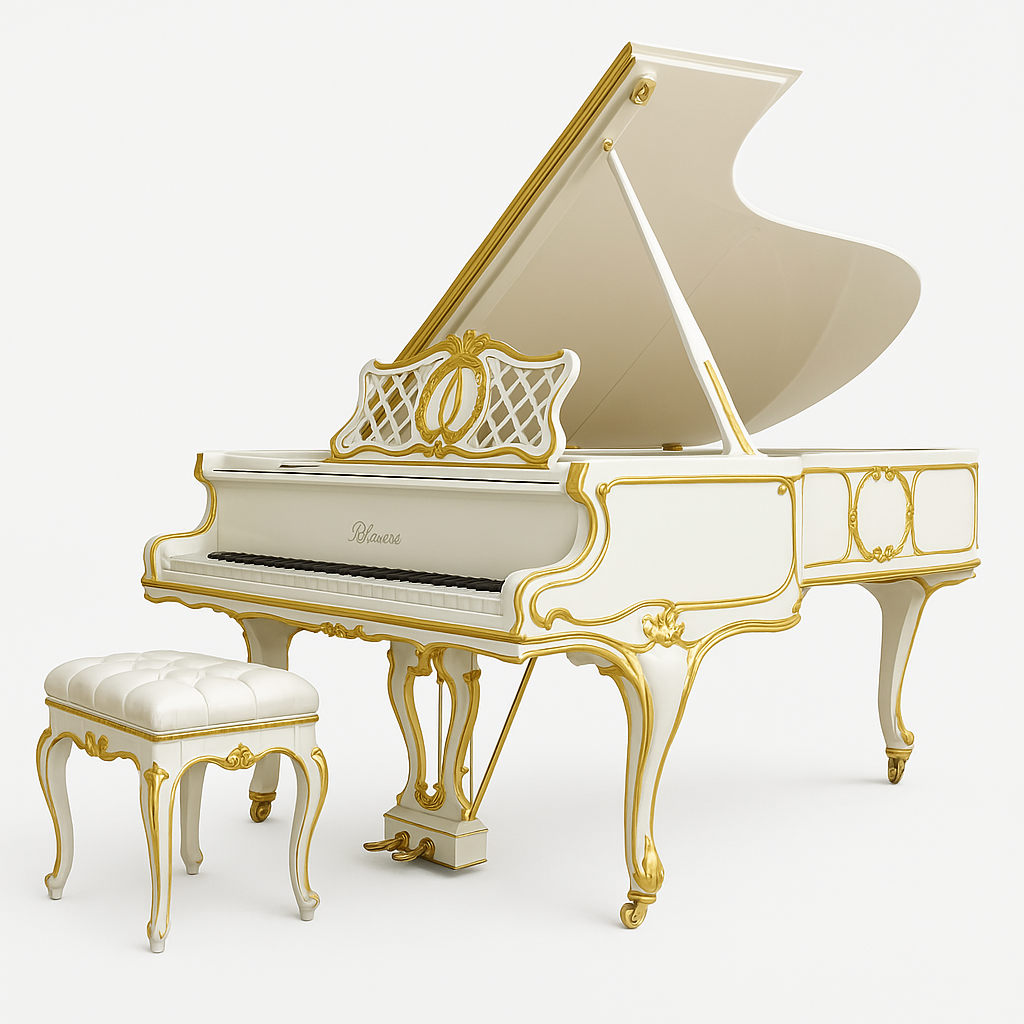
Leo ran his finger over the Blüthner’s gold leafe applicae, admiring the craftmanship carved into the Roccoco white polished lacquer. The fallboard meeting the key bed with a muffled thud gave him as much joy as getting to play such an exceptional instrument. Closing the lid of the unique grand, he felt guilty for again harbouring an overwhelming wish to own it. His passion was so heady that he often thought about fabricating a problem with it and offering to buy from Katrina, but he could never afford it even at a quarter of the price. One way or another, he would find a way to make it his.
He pressed his deck shoes onto each of the three gold pedals once more to check that the tension in the springs were to his liking. Switching from hard to soft soles made all the difference to a virtuosa like Katrina Valentina.
Once a month he let himself into Katrina’s home to tune the Blüthner Supreme Special Edition with 24-carat gold inlay. In three years, he had met her only three-and-a-half times. Hired by her manager after a recommendation by composer, Alfred Shumer, he had managed to spend two afternoons a month inside her home for the first year without encountering her.
Their first meeting transpired when she descended the spiral stairwell in the hall. She was a sweep of blond locks and avocado eyes, pausing in her white chiffon negligee to huskily enquire, “Could you pay special attention to the damper, please?” before disappearing back upstairs.
He could only nod, so struck was he by her lonely presence. The memory of her body reposed along the banister like a bass clef lingered for days. Afflicted by concern for her, heavy emotions remained with him whenever he returned, hoping to meet her again and perhaps comfort her.
The second time they met was eighteen-months later, an accident. He was exiting her home one morning with his little brown leather bag of tools. She arrived with her arm linked by a dismissively brash man in a tux, sporting a thin moustache and impeccable skin. Her eyes barely met Leo’s but said more than her polite, “Oh, hello again.” Enough for Leo to animate worries about her safety before he dutifully left. The third time was a day later when Leo returned to hear the Blüthner after its rest day and to make any minuscule adjustments needed.
Katrina entered the piano room composed and indifferent towards a subtle tone of fear in her voice. “Can I offer you anything?” she muttered, eyes reaching for him.
“I’m fine,” he said, trying not to show he noticed more about her state of mind than was professionally acceptable.
Again, she quietly begged companionship in her contrived, “Lemon tea?”
“Okay, thank you.” He accepted despite a dislike for it, but he would not allow himself a second glance at her naked body beneath her gossamer robe. As she passed the rear bay windows, he kept his mind tuned to the Blüthner as his heart skipped three heavy knocks.
“My pleasure,” she said, flatly feigning freeness, turning back to gaze at him.
“Actually, I have my flask. Don’t trouble yourself,” he said, staring at his little leather bag then faking a polite smile.
She glanced at the stairs suggestively. “It’s no trouble.”
He unnoticed what he could hardly ignore and returned his attentions to the Blüthner. “I’m fine with my flask, thank you.”
Despite the invitation in her voice, every finite turn of his tool was to him equal to her perfectly weighted key presses. His passion for perfectionism was his concert.
Once more she said, “Lemon tea,” while ascending the stairs, her waif body turned halfway to him, empty eyes calling.
“Thank you, I’m good.”
Something quivered in her like a sustained G-3 in need of tuning, he noted as she slinked back upstairs, sipping coffee from his flask. He turned a screw an exact sixteenth of a millimetre and gave the C-5 three little taps: clink, clink, clink.
“Perfect,” he muttered. Perfect in that he liked it to be imperceptibly flat, which felt more human to him. “We will breathe life into the now and then once more, Katrina,” he muttered, looking at the empty stairwell, obediently ignoring how his voice had cracked and trailed off saying her name.
Their third-and-a-half meeting occurred four months later. Her manager had asked him to come at a specific time. Nervous at the thought of running into her again, he arrived without his soft shoes and decided to return the next day instead. The sound of her playing the Blüthner drifted through the open sash windows and made the hairs on his neck stand up. Clair de Lune was rarely played with such untainted feeling and precision.
It was this half meeting that gave him the most insight into Katrina, who assumed no audience. Hearing her spirit alive and pure, unaffected and authentic, filled him with a passion he knew would linger for days. A light rain soaked heavy into his wool coat as he waited below the window, wondering if a woman like Katrina might consider falling in love with someone like him. They possessed, after all, passion, perfectionism and a love of piano. Since meeting her, he was forced to admit, getting lost in his work could no longer keep at bay his troubling loneliness. Her passions now possessed notes of his obsession.
As he left, he shook himself free of the fantasy. Katrina might not have been so put together in reality as she was behind the piano. Plus there could be no real interest in a romance with someone like him, dishevelled, a workaholic and needily falling in love.
I’m content being the unsung magician behind her music, he thought as he skulked away.
*
Returning the next morning, the day before Katrina’s biggest concert in the Opéra Royal de Versailles, he lets himself in with his key. He pays attention to the ambiance inside the house; its absence. “She must be out.”
Sitting on the stairs where he first glimpsed her bent over the banister, he remembers every encounter with her. He wiggles his toes into his deck shoes and turns his thoughts towards the acoustics in the piano room. A touch on the A-3 is all she needs, perhaps a little on the F#-4. As he turns his head, his eyes find a sight his mind refuses to comprehend. Katrina lays lifeless on top of the keyboard, her blonde hair matted with the darkest of clarets. Beside her blood-speckled white fluffy slippers lies a small silver revolver.
He scrambles towards her, his voice breathy with a hi-pitched pine for the few times he had met her, all flashing through his mind with a sickening thump of his heart. He stops over her unencumbered body and looks at a scrawled note left on the music rack:
Thank you for your excellence, Leo. Alas, to maintain perfection we must be alone; unadulterated. I now know you are burdened by a similar passion and lonely soul. They breed madness and sickness, which my spirit can no longer endure. I hope you accept my offer this time.
With contrite glee, he murmurs the last line, “The piano is yours.”